




BEAUTY
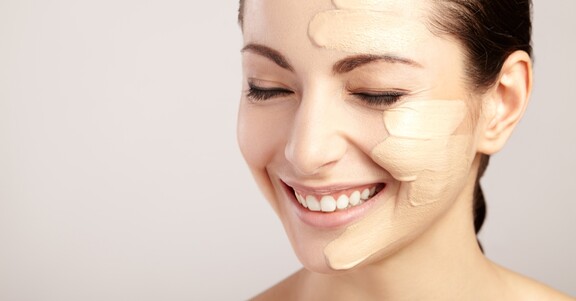
The purpose of a foundation is to even out your skin tone. A foundation minimizes the appearance of everything from redness and blemishes to age spots. When your skin tone looks even, your skin looks firmer and younger. In addition to evening out your skin tone, a foundation can give your skin a glow and moisture or mattify it and be oil-free. To choose the right foundation for your skin, you need to look at the basics. What does your skin look like and what does it need help with. There are four things to consider when choosing a foundation:

Skin type
What skin type do you have? Does your skin get dry quickly during the day? Or does it get shiny and oily?
If you have dry skin, you need a foundation that provides lots of moisture so that it doesn't crack during the day. Foundation for dry skin is labeled "Moisture", "Aqua", "Rich" and the like. These types of foundations also provide a glow, as dry skin quickly looks dull and sallow.
If you have oily skin, you need a foundation that mattifies. Choose an oil-free version that ensures that the foundation stays on all day. Your skin will also not look shiny by choosing an oil-free foundation. These types of foundations are marked with "Mattifying", "Oil-free" and similar. These types are often a little thicker and more powdery in consistency, so that the foundation binds to the oil that you naturally have in your skin.
If you have normal or combination skin, you have more freedom in choosing. Then you need to think about what finish you want, i.e. whether you want the foundation to make your skin glow or whether you like a matte finish.
Coverage
The amount of coverage that different foundations provide varies. Don't choose a foundation with full coverage if you don't need it, as it will quickly look unnatural. Here too, you have to look at the starting point: Do you really have a lot of redness in your skin? Do you have a lot of blemishes, scars or uneven pigmentation? If your skin doesn't have any of these features, choose a foundation with light coverage.
Colour
This is where most people fail. A foundation should be as SIMILAR to your skin tone as possible in lightness/darkness. Always test foundation colour on your jawline. When you find the right one, it blends so well into the skin that it practically disappears before your eyes.
At the same time, you should avoid pink tones if you have a lot of redness in your skin tone, and instead go for one that is more warm and olive. If you have fair skin, it is important to choose a colour tone that is too light rather than one that is too dark if you cannot find the perfect tone.
If you have a darker skin tone, it is important to think the other way around. If you can't find the perfect colour in lightness/darkness, choose the colour that is half a shade darker instead of lighter. If you choose one that is too light, your skin will look gray due to the white colour in the foundation. In addition, it is important to make sure that the foundation has a red and warm enough tone to neutralize the gray/blue tones your skin can get when you are tired or have dry skin.
All foundations are marked with numbers in increasing value the darker they get in colour. In addition, many are marked with W=Warm, C=Cold and N=Neutral to indicate whether the tone of the colour is warm, cool or neutral.
Liquid or powder?
Foundation comes not only in liquid form with a pump, but also in cream form, powder, mineral powder, spray and the latest new one called "cushion". The different types give different results. A liquid foundation can either give a glow or a matte finish, while a powder foundation will only matte. A foundation in thicker cream form will give a glow and moisture. This means that here too you have to make a choice based on your own skin type and desired coverage.
A “cushion” foundation is actually a liquid foundation, but in a special dispenser. They come in boxes that look like powder compacts, but when you open one, there is a sponge with many small pores in it that you have to squeeze in order for the liquid foundation to come up and out of the bottom. Therefore, these types of liquid foundations are much smarter to carry in your bag when traveling than the traditional ones in glass bottles with a pump. “Cushions” are often very thin and have very light coverage.